Study: Some threatened species may miss out as zoos try to balance conservation efforts with competing pressures
Zoos do not consistently increase support for species as their conservation needs grow and they attempt to balance competing pressures, new research suggests.
By Dave Rogers | Published on 30 September 2026
Categories: Press office; Research; School of Animal, Rural and Environmental Sciences;
In the largest study of its kind, researchers at Nottingham Trent University analysed more than 7,200 species across 613 zoos in 72 countries across a 30-year period.
The team compared changes in zoo animal holdings with changes in species’ conservation status, including extinction risk, international trade protections and involvement in zoo conservation breeding programmes.
Zoos and aquariums manage the fate of thousands of species worldwide, from breeding programmes which help bring animals back from the brink of extinction, to the everyday decisions about which species to house and where.
The researchers argue the study has revealed the complex and competing factors that go into zoos’ decisions on species planning and point to ways the sector could continue to sharpen its conservation impact even further.
Working with data provided by non-profit organisation Species360, the team found that species which became more threatened on the ‘IUCN Red List of Threatened Species’ or had increased trade restrictions, were generally not more likely to be held by additional zoos.
Similarly, species which became less threatened or had trade restrictions reduced were rarely phased out.
Once species were established within a zoo, zoos generally committed to sustaining the species over the long term, the study showed.
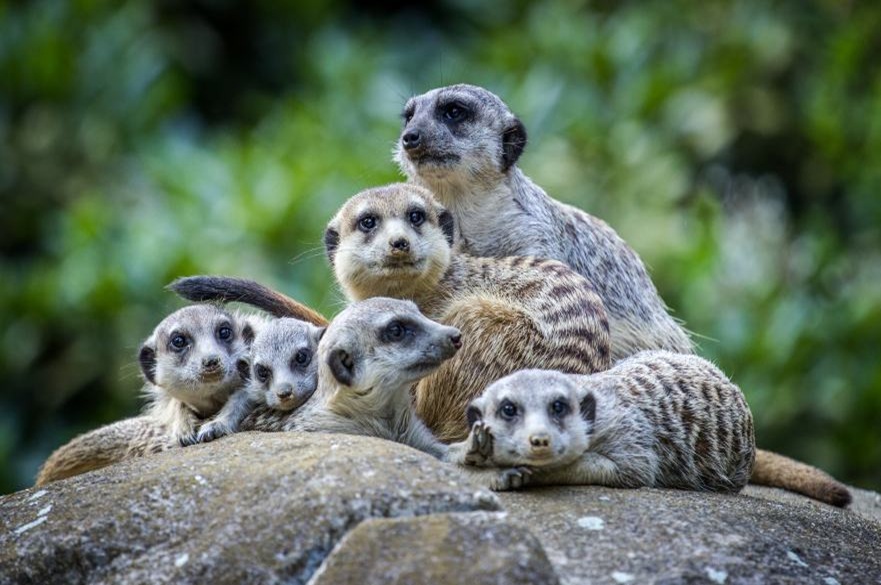
Domestic species, pet-trade reptiles, and crowd favourites such as chickens, goats, meerkats and sheep, were among the species showing the strongest increases in zoo holdings, suggesting visitor engagement, and the funding it generates for conservation work, continued to shape collection decisions alongside formal conservation criteria.
The largest predictor of growth in zoo holdings was participation in management or breeding programmes, rather than changes in animals’ conservation or protection status, despite some species in breeding programme expansion being of relatively low conservation concern.
The researchers say this underlines coordinated, community-run breeding programmes as one of the zoo sector’s most effective conservation tools, building on the sector’s track record of high-profile ex situ recovery efforts such as the California condor, black-footed ferret and Arabian oryx.
The team argues their findings make the case for more strategic and standardised species planning frameworks, to help zoos weigh conservation value alongside these other pressures more explicitly and consistently across the sector.
These approaches should strengthen, rather than replace, the judgement calls zoos already make, they say.
“We revealed a conservation gap in zoos, finding that most did not consistently increase support for species as their conservation concern increased, nor reduce support when it decreased,” said Samantha Ward, Professor of Zoo Animal Welfare and Legislation in Nottingham Trent University’s School of Animal, Rural and Environmental Sciences.
She said: “Instead, species managed through zoo breeding programmes, including popular visitor favourites, were more likely to expand.
“Challenges for zoos globally could include limited space and expertise. There is only a certain amount of space within a zoo boundary and they must balance conservation-important species with those that bring in the visitors. Additionally, some of the rarest species can be difficult to keep and knowledge of how to house them, feed them and improve breeding may be limited.”
Lead author Hannah Jenkins, who carried out the research as part of her PhD at Nottingham Trent University, said: “What struck us wasn’t a lack of commitment, it was how rarely a change in a species’ conservation status on its own seemed to move the needle. Species-planning is a genuinely complex balancing act: zoos are weighing conservation value against space, welfare, cost and visitor engagement, often without a shared, standardised framework to guide those trade-offs.
“Our hope is that this research supports the sector with practical evidence to build clearer species-planning tools, so that as conservation needs change, zoos are even better equipped to respond."
The research, which also involved NTU’s Nottingham Business School, is published in the journal Proceedings of the Royal Society B.
Notes for Editors
Press enquiries please contact Dave Rogers, Public Relations Manager, on telephone +44 (0)115 848 8782, or via email.
About Nottingham Trent University:
Nottingham Trent University (NTU) has been named UK ‘University of the Year’ five times in six years, (Times Higher Education Awards 2017, The Guardian University Awards 2019, The Times and Sunday Times 2018 and 2023, Whatuni Student Choice Awards 2023) and is consistently one of the top performing modern universities in the UK.
Students have voted us first in the UK for course quality, top five in the UK for employability and third best University in the UK (Uni Compare 2027). We are ranked in the top 25 universities in the country (The Guardian University Guide 2026).
We have over 35,000 students and more than 4,000 staff located across five campuses. It has an international student population of over 5,000 and an NTU community representing over 160 countries.
NTU owns two Queen’s Anniversary Prizes for outstanding achievements in research (2015, 2021). The Research Excellence Framework (2021) classed 83% of NTU’s research activity as either world-leading or internationally excellent.
NTU was awarded GOLD in the national 2023 Teaching Excellence Framework (TEF) assessment.
NTU is a top 10 for sport (British Universities and Colleges Sport league table 2025) and was named as Sports University of the Year (Daily Mail University Guide 2025).
NTU is a holder of the University Mental Health Charter, recognising the commitment an institution has shown towards continuous improvement in the area of mental health and wellbeing.
NTU is the most environmentally sustainable university in the UK and third in the world (UI Green Metric University World Rankings, 2025).