What is school inspection for? Ofsted needs more than an overhaul – it needs a fundamental rethink
NTU research into school inspection, carried out ten years apart, shows the sustained impact of Ofsted judgements on schools. Dr Andrew Clapham and Rachel Harding discuss the latest proposals to reform the system, and what needs to happen to make inspection a genuine mechanism for supportive school improvement.
By Dr Andrew Clapham, Rachel Harding | Published on 5 October 2026
Categories: Press office; Research;
Recent reports that the government intends to ask Ofsted to take greater account of the circumstances in which schools operate are welcome, particularly for schools serving disadvantaged communities, pupils with SEND and those learning English as an additional language.
However, this context alone cannot solve the deeper problems embedded in England's inspection system.
Our research, conducted a decade apart, points to a much more fundamental issue regarding the power of Ofsted judgements and raises the question: what should school inspection be for?
A decade of research shows the power of Ofsted judgements
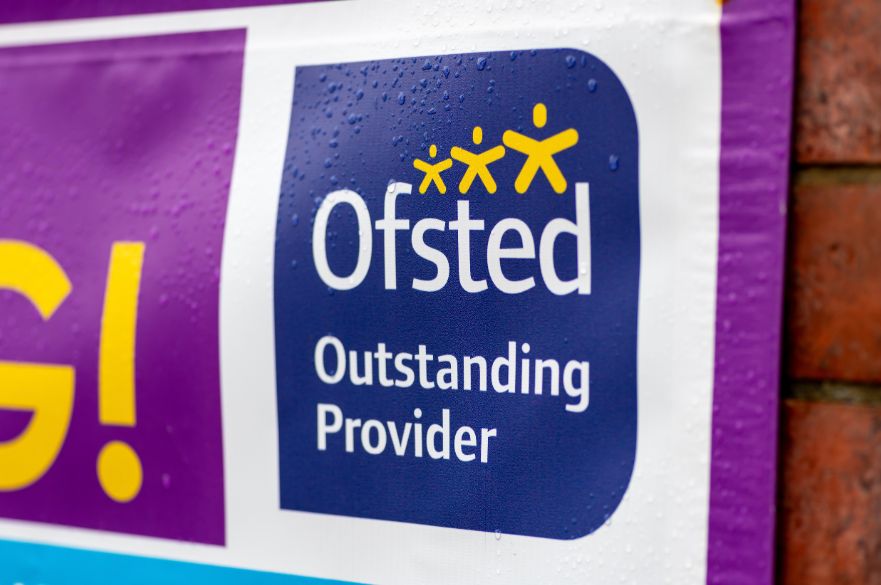
In 2016, we examined how Ofsted judgements, particularly labels such as "Outstanding", acquire extraordinary symbolic power.
We argued that these single-word grades become far more than descriptions of school quality. They not only shape professional identities, but seemingly every aspect of what schools do.
Schools do not simply ‘receive’ Ofsted grades - they live with the consequences of them.
Ten years later, our analysis of 233 submissions to the Parliamentary Inquiry into Ofsted's work with schools demonstrated the human consequences.
Contributors described experiences of fear, anxiety, shame, powerlessness and, in some cases, suicidal thoughts.
What was striking was the continuity between the two studies. The first explained why inspection judgements matter so much - the second revealed the immense personal and professional consequences of them.
This continuity suggests that the problem is not simply how inspection is conducted, but what inspection has become. A system built around high-profile judgements inevitably creates winners and losers.
Even if contextual factors are considered more carefully, inspections will continue to generate significant pressure if their primary function remains the allocation of labels that carry profound consequences.
Context matters, but it can’t fix a high-stakes system
The government's stated ambition for an inspection system that is "rigorous and proportionate" and which "genuinely supports school improvement" therefore raises a crucial question - can an organisation simultaneously act as both a developmental partner and the source of high-stakes judgements?
For many teachers and school leaders, Ofsted is not experienced as a supportive improvement agency.
It is experienced as a body with the power to impose reputational damage, affect careers and shape public perceptions of schools – and seen as a head teacher ‘punishment agency’, rather than a school development organisation.
The fear generated by inspection is a predictable outcome of a system in which judgement, rather than development, remains the central organising principle.
Our analysis of the Parliamentary Inquiry found widespread concerns that inspections fail to account adequately for local circumstances and realities. While proposals to recognise context are welcome, the detail matters enormously.
Equal treatment is not always equitable treatment. Schools serving very different communities may require different expectations, different forms of support and different measures of success. A genuinely developmental inspection system would begin from this premise.
Yet even this would not address the most troubling finding from our recent work - the continuing link between high-stakes inspection and serious psychological harm.
Contributors to the inquiry described becoming trapped between competing demands, feeling unable to challenge judgements and facing consequences that extended far beyond the inspection process itself. Some reported experiences consistent with suicidal ideation, such as thoughts and feelings about suicide.
These concerns cannot be treated as peripheral to debates about inspection reform. An inspection system cannot be regarded as proportionate if it continues to generate such levels of distress.
Rethinking what Ofsted is for
The fundamental challenge for ministers is therefore not simply how Ofsted should inspect schools, but what Ofsted is for.
If the goal is genuinely to improve education, then inspection must move away from a culture of judgement and towards a culture of development.
This means reducing the power of reductive performance labels, recognising context meaningfully rather than superficially and ensuring that accountability mechanisms do not come at the expense of staff wellbeing.
A decade of research points to the same conclusion. High-stakes judgements create powerful incentives and powerful pressures.
Unless that underlying model changes, reforms may alter the appearance of inspection without addressing its consequences.
The question is no longer whether Ofsted should take context into account. The question is whether England is prepared to move from an inspection system that judges schools to one that helps them to develop their capability - that would be genuine reform.
Dr Andrew Clapham, Associate Professor of Education Policy, and Rachel Harding, Research Fellow, Nottingham Institute of Education, Children and Youth.
Harding, R., & Clapham, A. (2026). Ofsted experiences: performing inspection and suicidal ideations. Journal of Education Policy, 1–21. https://doi.org/10.1080/02680939.2026.2622958
Clapham, A, Eldridge J and R. Vickers., 2016. Legitimation, Performativity and the Tyranny of a “Hijacked” Word. Journal of Education Policy. 31(6), 757-772. https://doi.org/10.1080/02680939.2016.1181789