Why do landslides occur – and can we predict them?
From tiny rockfalls to enormous slope collapses, landslides can happen almost anywhere. Nottingham Trent University's Professor Dave Petley, a global leader in the study and management of landslides, explains what causes them, whether we can predict them and how climate change could make them more common.
By Professor Dave Petley | Published on 12 October 2026
Categories: Press office; Research; School of Animal, Rural and Environmental Sciences;
What you need to know:
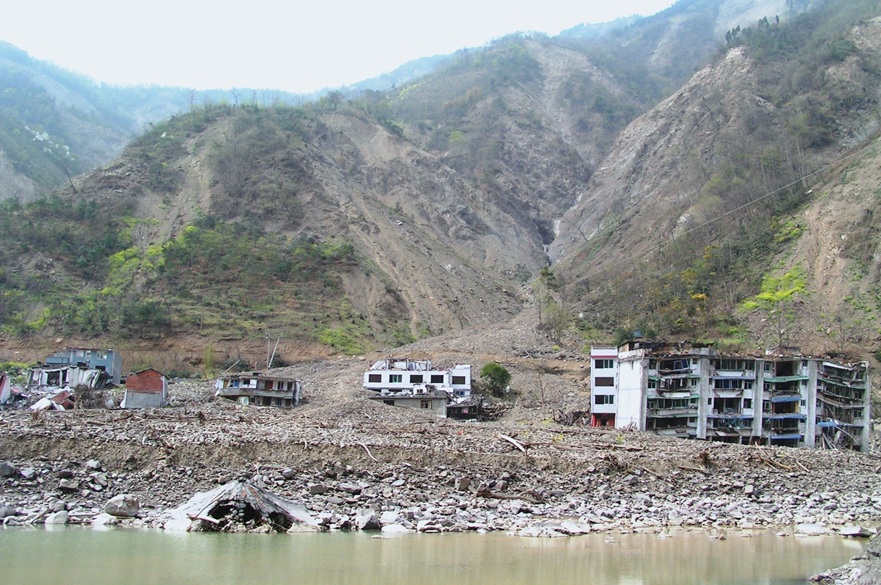
- Landslides happen when rock, soil or debris moves downhill under gravity, ranging from small rockfalls to enormous slope collapses.
- They can be caused by unstable slopes and triggered by events such as heavy rainfall, earthquakes and human activity.
- Although some landslides can be forecast using rainfall data or slope monitoring, predicting exactly when and where one will happen remains difficult.
- Drainage, slope reinforcement and barriers can reduce landslide risks, but preventing very large slope failures is often impossible.
- Climate change is increasing landslide risks in some areas through more intense rainfall, loss of vegetation and melting ice in mountain regions.
What is a landslide?
A landslide is the downhill movement of earth materials – rock, soil and/or debris – under the force of gravity.
In effect, it is the process through which a slope collapses.
The key distinction is what is moving. If the dominant material is water, it is a flood. If it is snow and ice, it is an avalanche.
There is a huge range of different types of landslide.
A rockfall might involve a single, coffee-cup-sized block falling from a coastal cliff. At the other extreme, an avalanche of rock can have a mass of more than a billion tonnes.
Landslides can slide, flow or avalanche, and their movement can range from just a few millimetres a year to more than 250 km per hour.
What causes a landslide?
There are two parts to understanding what causes a landslide: what makes a slope unstable and what triggers the movement.
One cause is a slope becoming too steep to remain stable.
For example, a river might erode the foot of a slope. Over time, this can make the slope unstable.
Glaciers can also make slopes too steep, while removing trees can leave an exposed slope that is too steep to remain stable.
In other cases, the material that makes up a slope can weaken over time and eventually collapse.
The movement itself is then usually triggered by an external event, such as heavy rainfall or an earthquake.
Humans can also trigger instability through activities such as road construction or mining.
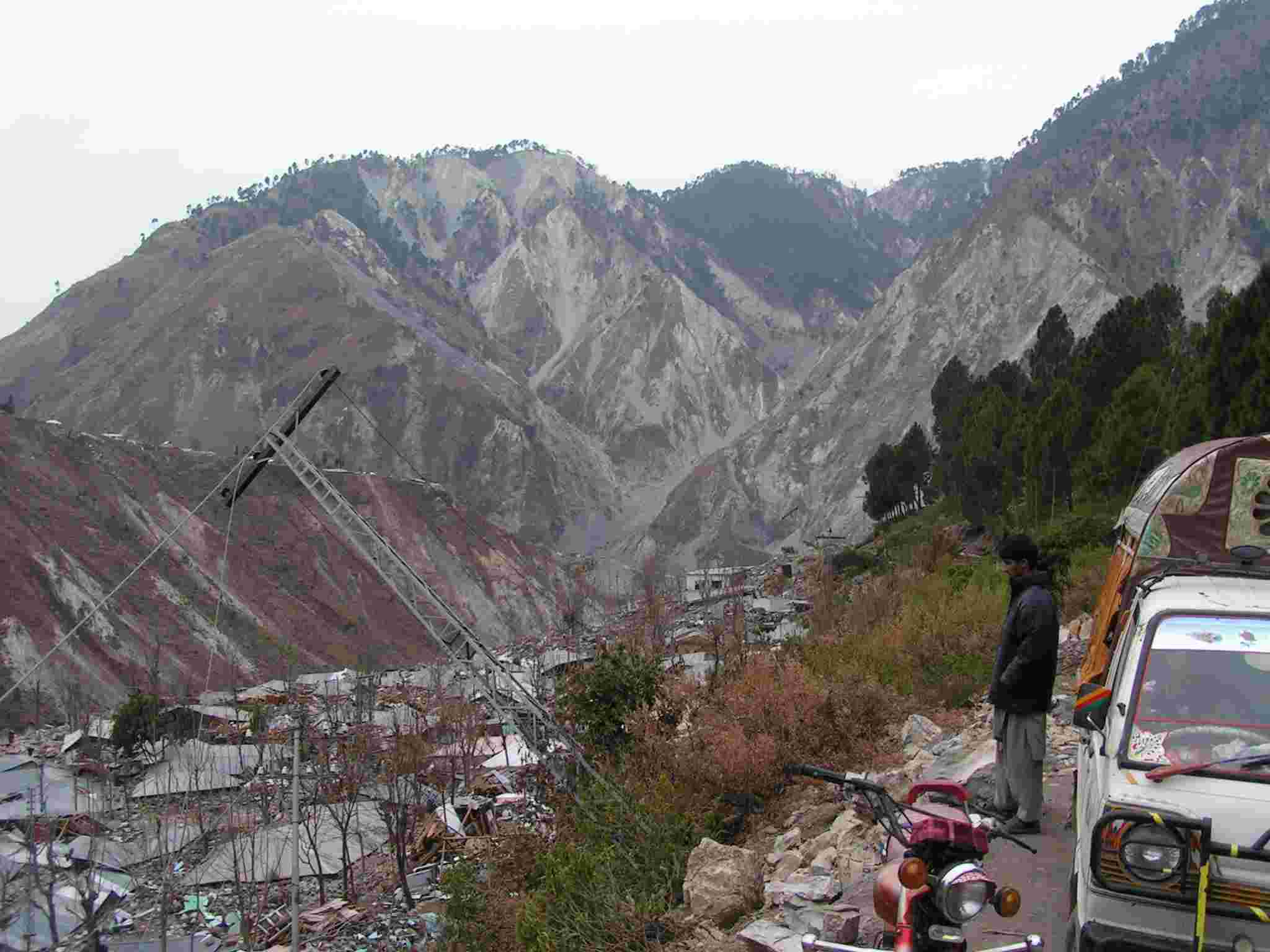
Pakistan is among the countries most affected by landslides (Image: Prof Dave Petley)
Can we predict landslides?
In a very limited number of cases, it is possible to predict when and where a landslide will happen by analysing patterns in the movement of a slope.
This could eventually form the basis of warning systems in high mountain areas, although the patterns and processes are poorly understood and require much more research.
More generally, landslides are forecast by looking at the events that trigger them.
For example, some places – such as Hong Kong and Japan – have warning systems based on rainfall. If records of previous landslides show that they tend to happen when rainfall exceeds (for example) 50 mm in an hour, rain gauges and radar can be used to monitor rainfall.
When that threshold is reached, an alert can be issued.
But this does not usually tell us whether a particular slope is unstable.
In some situations, detailed monitoring of an individual slope can provide a warning that it is beginning to move.
On railways, for example, instruments can be placed on earthworks next to the track to detect signs of movement. If movement is detected, signals can be turned to danger to stop trains.
Can we prevent landslides from causing damage?
In most cases, it is possible to manage slopes, and there are many engineering approaches that can reduce the risk from landslides.
One of the most common is drainage, which reduces the likelihood of rainfall triggering a landslide.
Other approaches include reducing the gradient of a slope or providing support for it.
Rockfalls and boulder rolls can be managed using barriers, while some flows can be captured in engineered structures.
But these approaches can be very expensive and can seriously alter the look of the landscape.
The approach used therefore depends on the costs and benefits involved.
For very large slope failures, prevention or management is effectively impossible.
In these cases, the main approach has to be reducing the vulnerability of the assets at risk.
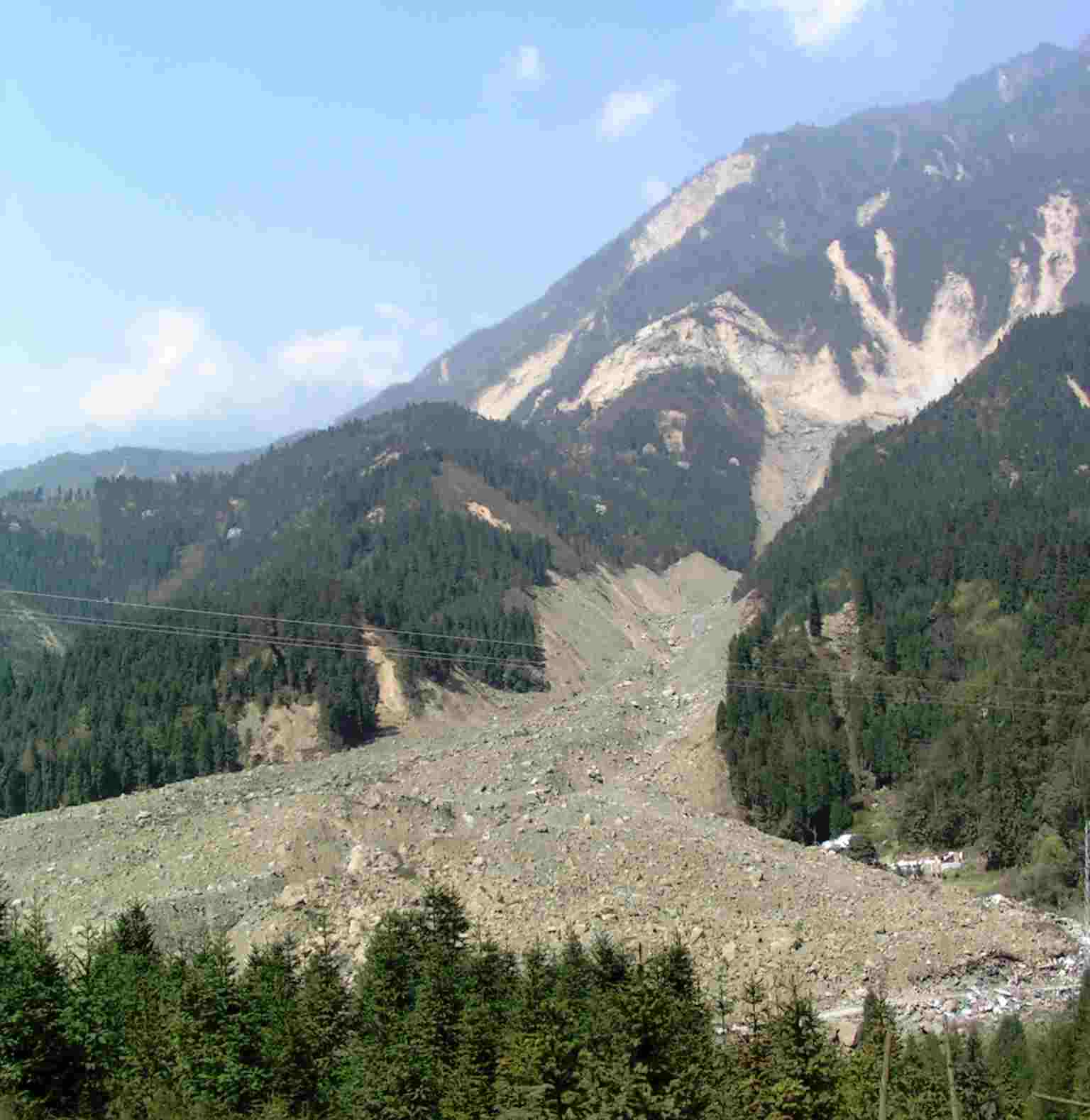
Image following a landslide in China (Prof Dave Petley)
How is climate change affecting landslides?
Climate change is having profound and serious impacts on landslide risk.
At lower elevations, one of the main factors is changing rainfall patterns.
Warmer atmospheric temperatures mean the atmosphere can hold more moisture, leading to more intense rainfall. Slopes are particularly susceptible to the most intense rainfall events.
The loss of vegetation can make this worse. Trees can die because of extreme heat, while wildfires can strip slopes of vegetation that protects them.
In high mountain areas, the situation is different.
Slopes are often held together by ice, which is now melting at a greatly accelerated rate. This can lead to slope collapses.
Some classic climbing routes in the Alps are becoming very dangerous because of increased rockfall activity.
The loss of glaciers in most mountain chains is also exposing slopes that are prone to collapse.
These problems are expected to become more serious as warming accelerates, and are being exacerbated by damage to the environment caused by human activities.
What are some of the most damaging landslides?
Some landslides have had devastating consequences.
In the UK, one of the best-known examples is the Aberfan disaster on 21 October 1966, when a colliery spoil heap buried a primary school in South Wales.
A total of 144 people were killed, including 116 children.
In Europe, the Vajont landslide in 1963 slid into a newly constructed reservoir. It generated a wave that overtopped the dam, killing about 2,500 people.
In 1999, heavy rainfall in Vargas, Venezuela, caused landslides that killed about 30,000 people.
More recently, the collapse of a rock slope supporting a glacier in Nepal triggered a debris flow that tore through the valley below. About 7,000 people were killed or are missing.
Where are landslides a particular risk?
Globally, some of the countries most seriously affected include India, Nepal, Pakistan, Bangladesh and China.
In these areas, steep slopes combine with monsoon rainfall and vulnerable populations to create high levels of risk.
In the UK, one of the greatest risks is associated with our ageing railway infrastructure.
There are tens of thousands of railway embankments and cuttings, many of them dating from Victorian times. Landslides are common during periods of heavy rainfall, although Network Rail actively monitors its assets to manage the risk.
Coastal cliffs also present a significant risk, as they can collapse onto beaches.
Professor Dave Petley is Vice-Chancellor and President at Nottingham Trent University and a global leader in the study and management of landslides. His research focuses on environmental hazards and risk management, with a particular focus on landslides, and he has advised national and international organisations on slope management. He also writes a popular blog providing commentary and analysis of landslide events and the latest research.