NTU and Makerere University strengthen strategic partnership to tackle shared global challenges
Senior leaders from Makerere University in Uganda visited Nottingham Trent University to explore how the longstanding NTU–MAK partnership can connect expertise across disciplines to address shared challenges and community priorities.
Published on 29 October 2026
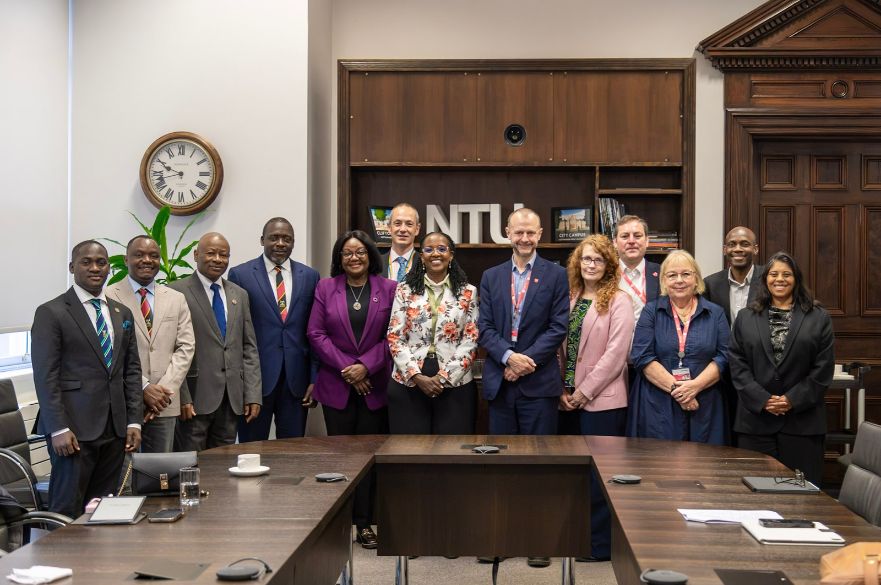
Nottingham Trent University (NTU) and Uganda’s Makerere University (MAK) explored the next phase of their strategic partnership during a senior delegation visit on 20 October 2026, building on 16 years of collaboration in research, education and community engagement.
Hosted by NTU’s Eastern Africa Centre (EAC) across the City and Clifton campuses, the visit brought together leaders and colleagues from both institutions to review the partnership’s achievements and identify opportunities for its future development.
The Makerere delegation was led by Dr Lorna Magara, Chairperson of Makerere University Council, and included senior colleagues from the university’s leadership and School of Public Health. They were welcomed by Professor Dave Petley, Vice-Chancellor and President of NTU; Professor Richard Emes, Pro Vice-Chancellor for Research and International; Professor Kirsty Smallbone, Executive Dean of the School of Science and Technology; and Professor Neil Mansfield, Executive Dean of Research and International Reputation.
The programme involved colleagues from NTU’s School of Social Sciences, School of Science and Technology, School of Animal, Rural and Environmental Sciences, and Nottingham Business School, alongside those supporting international partnerships and doctoral development.
Discussions built on a partnership that, by September 2026, had secured more than £2.4 million in funding across 22 completed or active projects, supporting collaborative research, education and engagement in Uganda and the UK.
Vice Chancellor Petley welcomed the partnership’s emphasis on equity and mutual benefit, highlighting opportunities for NTU to learn from Makerere’s experience of supporting government and society.
The NTU engagement formed part of a two-day visit that also included Nottingham University Hospitals NHS Trust, where the delegation explored hospital governance, medical education and research ethics to inform Makerere’s plans to develop a specialised teaching and research hospital.
Building on 16 years of collaboration
Since its beginnings in 2010, the NTU–MAK partnership has evolved from a collaboration rooted in public health into a broader programme spanning multiple disciplines and institutions. Joint research, student exchanges and staff collaboration have supported reciprocal learning between Uganda and the UK.
Founded by Professor Linda Gibson at NTU and Dr David Musoke at MAK, the partnership has maintained a focus on working directly with local communities. A central strand has been strengthening community health systems through training and support for community health workers, alongside research shaped by their experiences and local priorities.
Dr Jody Winter highlighted the partnership’s antimicrobial stewardship work, which has supported training for more than 1,000 health workers and reached more than 32,000 community members, alongside initiatives to improve prescribing and infection prevention in health facilities.
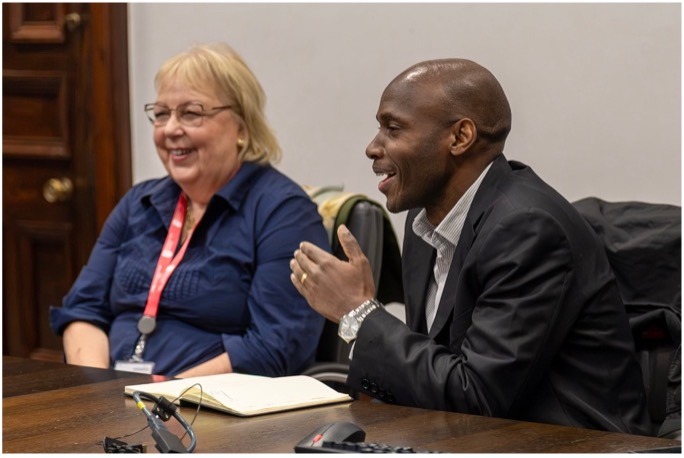
Professor Linda Gibson and Dr David Musoke, co-leads of the NTU–MAK partnership, said in a joint statement:
“When we began this partnership in 2010, our focus was on bringing people together around shared public health priorities. Those relationships have created opportunities to learn from one another and work with communities over the long term. The next chapter is about building on that foundation, connecting more disciplines and supporting the researchers who will take the partnership forward.”
Exploring new areas of collaboration
Discussions focused on how the partnership could bring complementary expertise together around shared priorities. Makerere colleagues highlighted urbanisation, climate and health, disasters and displacement, alongside opportunities connecting medicine, technology and entrepreneurship. The delegation also emphasised strengthening engagement with government so that research can inform policy, planning and public services.
Wider work presented during the visit illustrated how the partnership could extend into these areas.
Professor Andy Gill outlined expertise across NTU’s School of Animal, Rural and Environmental Sciences in sustainable agriculture, conservation and ecosystem restoration.
Complementing this environmental focus, Dr Raihana Ferdous shared British Academy-funded research exploring how extreme heat affects women’s work, caring responsibilities and livelihoods in informal settlements in Uganda and Bangladesh. Involving Makerere colleague Dr Kellen Aganyira, the project uses participatory approaches to bring women’s experiences into discussions about climate resilience.
Dr Amon Simba outlined how entrepreneurship research can recognise and support the skills, relationships and trading practices already present in underserved communities. His emphasis on locally grounded approaches opened up discussion of how innovation and enterprise could support livelihoods and connect with community-focused research.
Drawing on experience supporting social work development in Malawi, Dr Simon Cauvain highlighted connections between professional education, workforce development and social policy. This prompted discussion of potential links in social work education and research, alongside the partnership’s established public health strengths.
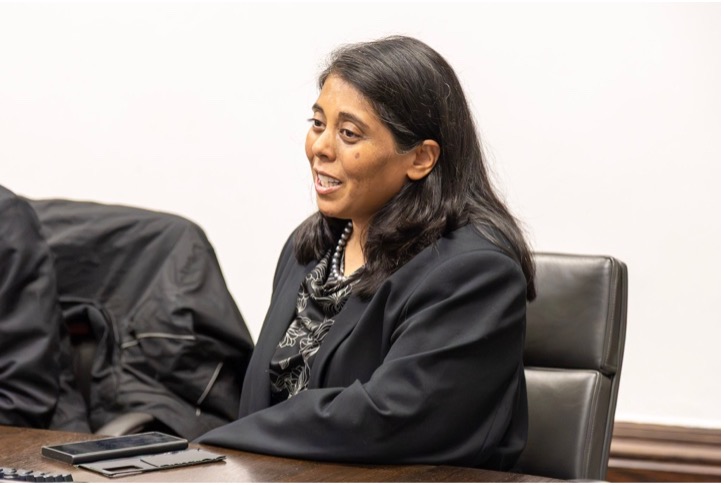
Professor Mazeda Hossain, Director of the NTU Eastern Africa Centre and Professor of Global Health, said:
“The next phase of this partnership is not simply about bringing more disciplines together. It is about what we can achieve together that we could not do alone and ensuring that communities help define both the questions we ask and the solutions we develop. The Eastern Africa Centre connects expertise across our institutions so that shared priorities and reciprocal learning can translate into research that informs policy and practice.”
Connecting student innovation with community priorities
Dr Helen Karditsas outlined how student collaboration can connect technical learning with local knowledge through NTU’s Engineering Grand Challenge. In February 2026, the three-week programme involved more than 600 undergraduate students tackling challenges identified by the EAC’s partners in Uganda and Kenya.
The winning NTU team developed a solar-powered steriliser concept for community healthcare settings and visited Uganda in June 2026, where they gathered feedback from community health workers. Learning that community health workers often carry out their work in shaded locations prompted the students to rethink aspects of the design.
During that visit to Uganda, multidisciplinary student teams from NTU and Makerere, spanning engineering, public health and business, also developed early-stage concepts in response to community visits. These included a proposed speech-to-text reporting tool intended to reduce administrative burdens on community health workers. The concept is being explored for prototype development. Together, these examples demonstrated how community feedback is needed to challenge assumptions and shape the development of potential solutions.
Supporting future researchers
Strengthening doctoral education was another focus of the visit. Dr Sherran Clarence, Co-Chair of the Eastern Africa PhD Hub, outlined the network’s work to support doctoral supervision and researcher development across partner universities, including NTU and Makerere, through shared practice and professional development.
Dr Clarence emphasised a needs-led approach, with doctoral candidates and supervisors helping to identify priorities for training and development. Discussions included mentoring, writing support and inclusive supervision, connecting the partnership’s future research ambitions with the support researchers need to pursue them.
Professor Hossain also highlighted disability-inclusive higher education as a potential area for collaboration through the EAC’s Inclusive Universities Network, building on its work with Kenyan universities.
Looking ahead
The closing discussion focused on joint research development, student and staff mobility, doctoral education and academic leadership. Participants supported developing a small number of interdisciplinary flagship initiatives shaped by community priorities, reciprocal learning and policy engagement.
They also explored how the Grand Challenges collaboration could inform a jointly designed experiential learning programme. Mentoring, shadowing and opportunities for early-career researchers to co-lead projects were highlighted as ways to support the partnership’s future leadership.
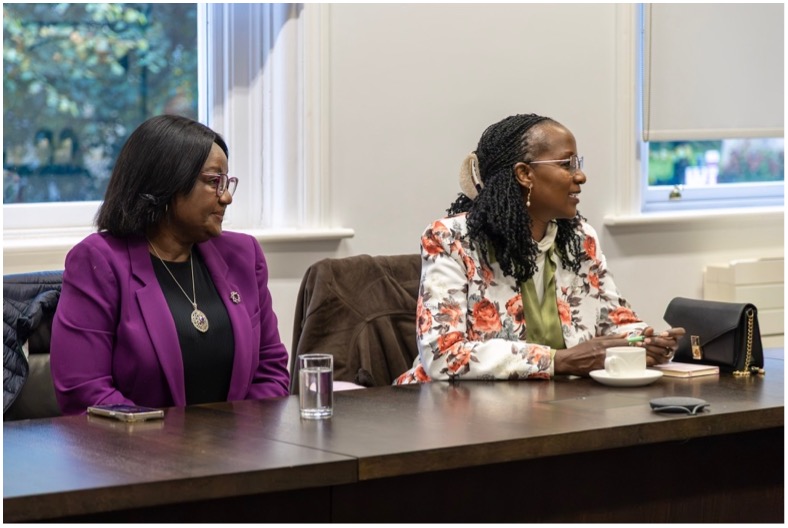
Dr Lorna Magara, Chairperson of Makerere University Council, said:
“This partnership has grown through sustained relationships and a shared commitment to communities. Its next chapter is an opportunity to bring more of our expertise together, connecting disciplines and ensuring that the knowledge we generate informs policy, strengthens public services and responds to people’s priorities.”
The next phase will build on the partnership’s established relationships, with both universities seeking to turn shared priorities into research, learning and practical benefits for students, researchers and communities in Uganda and the UK.
- Dr Lorna Magara — Chairperson of Makerere University Council
- Mr Yusuf Kiranda — University Secretary and Accounting Officer
- Professor Rhoda Wanyenze — Professor of Public Health and Dean, Makerere University School of Public Health
- Professor Josaphat Byamugisha — Director of Makerere University Health Services
- Dr David Musoke — Makerere lead for the NTU–MAK partnership and Head of the Department of Disease Control and Environmental Health, Makerere University School of Public Health
- Mathias Ssemanda — Principal International Relations Officer
- Vicent Lubega — Advancement Officer, Office of the Vice-Chancellor
- Professor Dave Petley — Vice-Chancellor and President
- Professor Richard Emes — Pro Vice-Chancellor for Research and International
- Professor Mazeda Hossain — Director, NTU Eastern Africa Centre; Professor of Global Health, Nottingham Institute of Health and Social Care, School of Social Sciences
- Professor Linda Gibson — Emerita Professor of Global Public Health, Nottingham Institute of Health and Social Care, School of Social Sciences
- Professor Neil Mansfield — Executive Dean, Research and International Reputation
- Professor Kirsty Smallbone — Executive Dean, School of Science and Technology
- Professor Anne Felton — Academic Director, Nottingham Institute of Health and Social Care, School of Social Sciences
- Professor Andy Gill — Associate Dean for Research, School of Animal, Rural and Environmental Sciences
- Dr Simon Cauvain — Deputy Director, Nottingham Institute of Health and Social Care, School of Social Sciences
- Dr Jonathan Gorry — Deputy Director, Nottingham Institute of Humanities, Arts, Society and Political Studies, School of Social Sciences
- Dr Ben Simpson — Head of the Department of Engineering, School of Science and Technology
- Dr Clare Newstead — Associate Director, NTU Global
- Chris Crabot — Associate Director, NTU Global
- Dr Amon Simba — Lead, African Innovation and Entrepreneurship (AfRIE) Hub. Associate Professor of Entrepreneurship and Innovation, Nottingham Business School
- Dr Jody Winter — Principal Lecturer in Microbiology, Department of Biosciences, School of Science and Technology
- Dr Damilola Omodara — Senior Lecturer in Public Health, Nottingham Institute of Health and Social Care, School of Social Sciences
- Dr Helen Karditsas — Senior Lecturer in Sport and Mechanical Engineering, Department of Engineering, School of Science and Technology
- Dr Raihana Ferdous — Senior Lecturer in Geography and Environmental Sciences, School of Animal, Rural and Environmental Sciences
- Dr Moses Mukuru — Senior Lecturer in Public Health, Nottingham Institute of Health and Social Care, School of Social Sciences
- Dr Sherran Clarence — Co-Chair, Eastern Africa PhD Hub. Senior Lecturer in Doctoral Education and Development, Research, Knowledge Exchange and Innovation
- Michael Brown — Research Associate, NTU Eastern Africa Centre
Find out more
- Explore the NTU-Makerere partnership, including its history, research programmes and impact.
- Read Listening First, Innovating Together: NTU and Makerere Students Co-Design Community Health Solutions in Uganda to learn how students and community health workers collaborated to develop locally informed innovation concepts.
- Learn about the partnership’s work in antimicrobial stewardship, which has supported community training and improved prescribing practices and infection prevention in Ugandan health facilities.
- Discover how experts from NTU’s School of Animal, Rural and Environmental Sciences are advancing sustainable agriculture, conservation and ecosystem restoration in Kenya.
- Read about the British Academy-funded project exploring how extreme heat affects women’s work, caring responsibilities and livelihoods in informal settlements in Uganda and Bangladesh.
- See how the AfrIE Hub uses locally grounded approaches to explore how innovation and enterprise can support livelihoods and strengthen community-focused research across Africa.
- Learn how social work development in Malawi is strengthening links between professional education, workforce development and social policy.
- Visit the East Africa PhD Hub to learn about support for doctoral supervision, researcher development and collaboration across partner universities.
- Read about the EAC’s Inclusive Universities Network and its work to promote disability inclusive higher education across Africa.
Discover the NTU Eastern Africa Centre, including all its research, partnerships, leadership networks and funding opportunities.