Facially expressive primates make better leaders
Facially expressive monkeys are more socially successful and lead better connected social groups, according to research by Nottingham Trent University which shows the benefits of facial communication in primates, including humans.
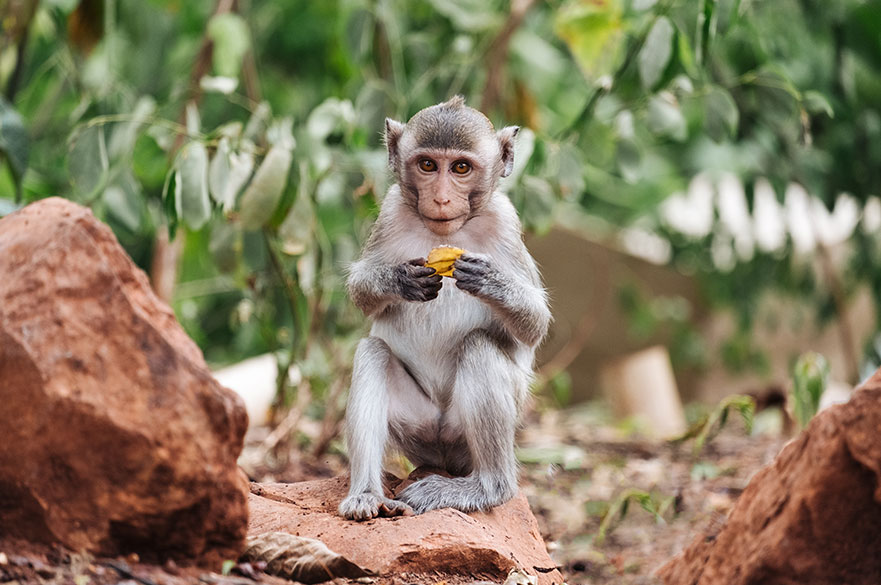
The study focused on nine social groups of rhesus macaques (Macaca mulatta) all consisting of one adult male, multiple adult females, and offspring.
As social animals, primates are known to use their face to convey information related to identity, family relations, dominance, benign intent, affiliation, and motivation to play.
The researchers analysed the facial expressions of the dominant male in each group by using a specially designed coding system for studying rhesus macaques, called MaqFACS, to track 17 separate facial muscle movements.
In addition, researchers quantified the social lives of all 66 monkeys across the groups, measuring how often each pair spend time together and how often they engage in friendly grooming interactions.
The males who displayed a greater diversity of facial expressions, perhaps to make their intent clear and reduce uncertainty, were found to be more socially connected within their groups, enjoying stronger social bonds and occupying more central positions within their social networks.
Social connectivity was also more evenly distributed throughout their group members when the dominant male was more expressive, suggesting the increased facial communication was linked to more tolerant leadership styles.
The research has implications for understanding human social behaviour, suggesting that facial expressivity has evolved to help us build and maintain social relationships.
Dr Jamie Whitehouse, research fellow at NTU’s School of Social Sciences and lead author, said: “This research demonstrates how individual variation in expressivity can shape social dynamics for primates, including humans – suggesting that a broader range of expressions might be more effective for navigating complex social relationships than a limited repertoire.
“Facially expressive individuals may be better equipped to build and maintain strong social connections, potentially leading to the range of benefits associated with group cohesion, such as increased access to resources, mating opportunities, and protection from threats.”
Professor Bridget Waller, Professor of Evolution and Social Behaviour at NTU and research project lead, said: “Humans have evolved incredibly expressive faces with highly complex facial musculature, and these findings helps us understand what advantage this has provided over evolutionary time.”
Facial expressivity in dominant macaques is linked to group cohesion has been published in the Royal Society journal, Proceedings B.
The work is part of a European Research Council funded project led by NTU’s Professor Bridget Waller. Individual differences in facial expressivity: Social function, facial anatomy and evolutionary origin (FACEDIFF) is an interdisciplinary project investigating the evolution of facial expression and how this results in benefits or costs in an individual’s social engagement.