Visitors urged to join a survey that may shape the future of zoos
Can zoos change hearts and minds? Zoo ticketholders are being invited to be part of a global research project into how zoo visitors respond to visits.
By Dave Rogers | Published on 17 March 2026
Categories: Press office; Research; School of Animal, Rural and Environmental Sciences;
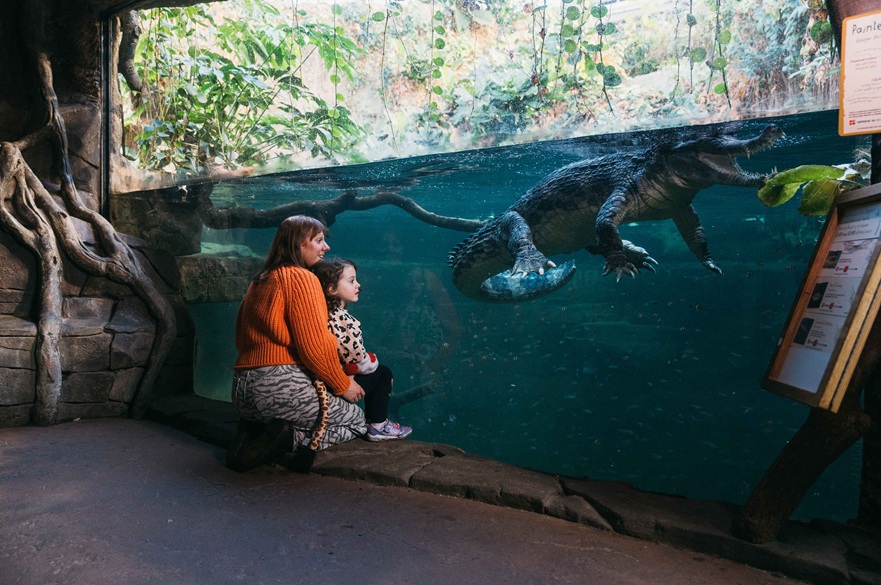
Chester Zoo scientists are spearheading a worldwide study in partnership with Nottingham Trent University into how zoo visits affect the mood, wellbeing and nature connectedness of people who spend time in these unique spaces.
Study designer Bridget Johnson, a Chester Zoo Conservation Scientist and Nottingham Trent University PhD candidate, specialises in social science research.
She said: “The people who take part are helping us understand what role zoos play in people’s connection to nature and their own wellbeing.
“There is clear evidence that spending time in green and blue spaces like gardens and waterscapes, and social inclusion and engagement with nature, is beneficial to human wellbeing.
“Anecdotally, we know many visitors see themselves as part of a zoo community and value exploring zoo habitats. But there is very little research specifically into zoos, where these factors come together in a unique way.”
Over the next few weeks, Chester Zoo ticketholders will receive emails asking them to take part in the study. Members and on-day visitors can already scan a QR code on site to take part in the research. As a thank you, all participants will be entered into a draw to win an animal adoption.
Comparing how people feel before and after they visit will provide a clear snapshot of what zoos can offer in terms of supporting wellbeing and nature connection. It is also an opportunity for self-reflection for zoo organisations in terms of how they can better benefit society.
Globally, zoos and their supporters put a lot of thought and effort into animal conservation, habitats and care. Less attention is paid to how spending time in a zoo environment may benefit visitors.
Ms Johnson said: “I’ve worked in zoos a long time and I see the value of what they do, but I think the Covid pandemic shone a light on how little political acknowledgement there is of their importance to people and conservation.
“Zoos really struggled during lockdowns and are still struggling with the cost-of-living crisis. Ordinary people who feel passionately about their goals support them – the Save Our Zoo campaign was an amazing example of that – but that same support is often not there at the policy level. It’s clear that if zoos are to survive, their value needs to be evidenced at every level, and this survey will give us hard data underpinned by a scientific foundation.”
The launch of the email invitation coincides with Chester Zoo’s ongoing app-guided and accessible ‘wild walks’ and buggy fitness sessions for parents aimed at encouraging people to spend time together in nature.
The zoo’s education team also hold regular animal talks, and the zoo hosts established and popular activities like Zoo Tots and the Memory Café, to help boost visitor wellbeing.
The scientific survey includes a section where respondents can share whether they took part in engagement activities like these, as they may influence the data.
Samantha Ward, Professor of Zoo Animal Welfare and Legislation in Nottingham Trent University’s School of Animal, Rural and Environmental Sciences, said: “Zoo animal welfare science has shone a light on how we can improve the lives of animals in zoos.
“Now we really need the human data to show how zoos can also benefit society for human health and wellbeing and can offer more than just a good day out with family and friends. This research is a really exciting step and we urge people to get involved if they are planning a visit.”
The survey is currently live in the UK, Denmark, Finland and Holland, and by the end of the study, Bridget and the research team aim to have gathered responses from people across every continent where zoos exist.
To learn more, visit www.chesterzoo.org.
Notes for Editors
Press enquiries please contact Dave Rogers, Public Relations Manager, on telephone +44 (0)115 848 8782, or via email.
Nottingham Trent University (NTU) has been named UK ‘University of the Year’ five times in six years, (Times Higher Education Awards 2017, The Guardian University Awards 2019, The Times and Sunday Times 2018 and 2023, Whatuni Student Choice Awards 2023) and is consistently one of the top performing modern universities in the UK.
Students have voted us the best university in the UK and 1st in the UK for student employability (Uni Compare 2025).
NTU is 4th in the UK for number of undergraduate students (HESA 2023-24) with over 36,000 students and more than 4,000 staff located across six campuses. It has an international student population of 6,000 and an NTU community representing over 160 countries.
NTU owns two Queen’s Anniversary Prizes for outstanding achievements in research (2015, 2021). The first recognises NTU’s research on the safety and security of global citizens. The second was awarded for research in science, engineering, arts and humanities to investigate and restore cultural objects, buildings and heritage. The Research Excellence Framework (2021) classed 83% of NTU’s research activity as either world-leading or internationally excellent.
NTU was awarded GOLD in the national 2023 Teaching Excellence Framework (TEF) assessment.
NTU is a top 10 for sport (British Universities and Colleges Sport league table 2025) and was named as Sports University of the Year (Daily Mail University Guide 2025). It has also been ranked as 25th in the UK by the Guardian University Guide 2026.
NTU is a holder of the University Mental Health Charter recognising the commitment an institution has shown towards continuous improvement in the area of mental health and wellbeing.
NTU is the most environmentally sustainable university in the UK and second in the world (UI Green Metric University World Rankings, 2024).
About Chester Zoo
Chester Zoo is a world-leading conservation and education charity that’s committed to preventing extinction and dedicated to raising awareness of key conservation and environmental challenges.
The zoo’s 130-acre site in Chester, which is home to more 500 threatened species, is where this species-saving work is made possible.
As a not-for-profit, the zoo ploughs everything into its conservation mission, both here in the UK and around the world.
It works with more than 3,000 species globally, including 140 international animal conservation breeding programmes, which are ensuring the survival of species on the very brink of extinction. It’s also home to five national plant collections, comprising of more than 1,000 species.
Experts from the zoo are recognised by governments and NGOs across the world as leaders within the global conservation community. Currently, the zoo is saving species on behalf of the Bermudan, Spanish and Portuguese governments, among others.
The zoo works with over 100 partners in more than 20 countries to recover threatened wildlife and restore habitats, including orangutans in Bornean rainforests, elephants and tigers in Indian grasslands, lemurs and frogs in Malagasy forests, rare fish in Mexican lakes and a host of species here in the UK.
The zoo influences policy both in the UK and internationally, engaging with governments worldwide to take action to halt the biodiversity crisis.
Its millions of annual visitors and huge online communities are part of the educational, scientific and conservation jigsaw, empowering them to be part of solutions for wildlife, creating a future where nature can survive and thrive.
Chester Zoo lives and breathes conservation – from its animal and plant care, to its scientific breakthroughs, to its policy work and its vital role in inspiring and educating people about the natural world and the impact humans have on it – creating and nurturing the conservationist in us all.