Report calls for algorithm transparency when deciding taxi drivers' pay and work
A new report is calling for greater transparency over how ride-hailing and private hire drivers are allocated jobs and paid through dynamic pricing platforms, after a small-scale study by Nottingham Trent University (NTU) identified variations in the fares and work opportunities presented to drivers under controlled conditions.
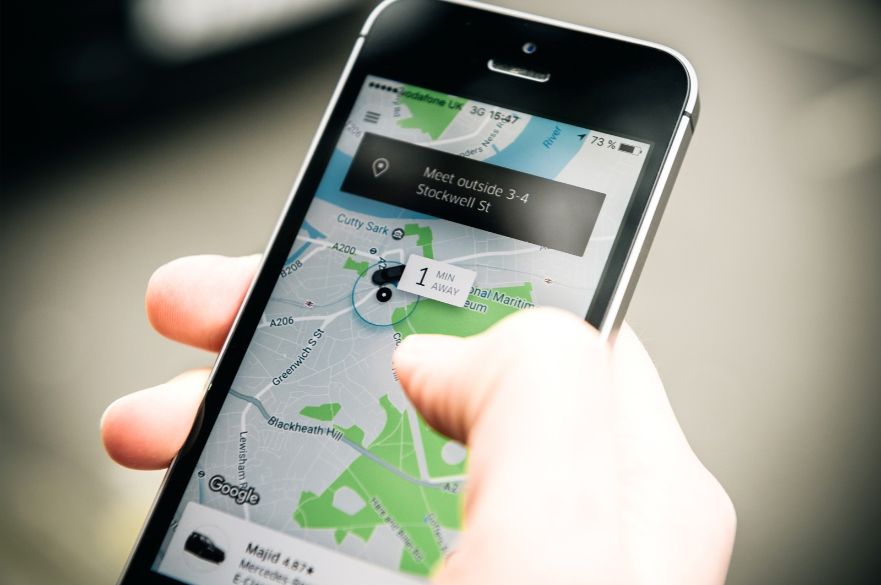
In partnership with the GMB Union, researchers carried out controlled observations with groups of Uber drivers from London and the Midlands. Drivers were brought together at locations in each region and asked to open and refresh the Uber app simultaneously, with their devices placed in close proximity to minimise differences in location and timing.
Results showed that some drivers were presented with trips while other co-located drivers were not presented with the same opportunities. The amounts displayed to drivers for the same or equivalent journeys could also differ, with some variation remaining in underlying trip remuneration, after differences in holiday pay were taken into account.
The findings suggest that pricing and allocation systems can shape not only what an individual journey pays, but also how opportunities to earn are distributed between drivers. Many of the 27 drivers who took part in the study reported having little understanding of how fares are calculated, why some jobs appear and others do not, or why drivers can receive different amounts.
Researchers argue that this lack of clarity can make it difficult for workers to predict their income, understand decisions affecting their work, or challenge outcomes they believe are unfair.
Uber have suggested that factors including GPS accuracy, device performance, connectivity, differences in estimated journey characteristics, Trip Radar, and the calculation of holiday pay may account for some of the variations observed – all of which are considered in the final report.
However, the study highlights a need for further independent scrutiny into the fairness, transparency, and comprehensibility of algorithmic pay and work-allocation systems, alongside greater protections and clearer explanations for workers about how earnings and access to work are determined.
Lead author, Dr David Dahill, senior research fellow and member of the NTU Work Futures Observatory and the Centre for People, Work and Organisational Practice at Nottingham Business School, said: “Dynamic pricing systems may be lauded for their ability to match supply and demand efficiently, but the lived experience of workers trying to earn a fair wage shows a different side, including a loss of control over earnings and working conditions, with little opportunity for their voices to be heard.
“The underlying differences in pay we observed may be generally considered small on individual trips, but even small variations accumulate over time. More importantly, workers cannot easily predict when or why these differences occur, or why some drivers are presented with opportunities that others are not.
“These added layers of uncertainty matter. Existing research, and what workers themselves tell us, suggest that unpredictable earnings can increase stress and encourage people to work longer to compensate for uncertainty.”
The report recommends that platform operators provide meaningful explanations of how fares, incentives and service tiers are determined, and stresses the need to communicate changes to pricing systems in advance.
Other recommendations include facilitating independent audits of algorithmic pay and allocation systems, and enabling workers and their representatives to access data needed to understand earnings patterns over time.
Regulators and policymakers are also urged to strengthen oversight of algorithmic management, improve worker protections and automated decision-making safeguards, and treat algorithmic pay systems as wage-setting mechanisms rather than simply as neutral market technologies.
The report also recommends recognising controlled audits and experimental evidence as legitimate tools for regulatory investigation.
Dr Dahill added: “Algorithms are increasingly making decisions that affect workers’ pay, opportunities and livelihoods, yet regulatory oversight has not kept pace. These systems should not simply be treated as neutral technologies. Where they effectively determine wages and access to work, they need appropriate scrutiny, transparency, and worker protections.
“One thing that became particularly clear during the final stages of this research was the disconnect between how platform operators describe the way these technologies work, and how workers experience them in practice. A system can have a technical explanation while still being extremely difficult for the people whose livelihoods depend upon it to understand, anticipate or challenge.
“We hope this report, alongside the growing body of research emerging in the UK, across Europe and the rest of the world, demonstrates why workers and their trade unions need to be more meaningfully involved before technologies and systems that affect pay, access to work, and working conditions are introduced or substantially changed.
“Worker voice should be part of the design and governance of these systems, rather than something sought only after problems emerge.”
Eamon O'Hearn, GMB National Officer, said: “GMB has been raising examples of differential pricing for drivers for years since the introduction of Trip Radar. That's why we welcome this report as the first study to look specifically into pairing and pricing.
"It provides another piece of evidence to put into the wider jigsaw of dynamic pricing and reinforces GMB's long held position calling for greater transparency around algorithmic systems, especially those that determine pay and earnings.”
Read the full report Algorithmic pricing, pairing, and earnings inequality in UK platform work: examples from pricing experiments in London and the Midlands, UK by Dr David Dahill, Dr Tom Vickers, Dr Sarah Smith and Professor Nadia Kougiannou, Nottingham Trent University.
Notes for editors
About Nottingham Business School at Nottingham Trent University
Nottingham Business School (NBS) at Nottingham Trent University (NTU) is a leader in experiential learning and personalisation of business, management and economics education and research - combining academic excellence with positive impact on people, business and society. NBS has an unrivalled level of engagement with business, public and voluntary organisations. With more than 8,500 students, NBS is also one of UK’s largest business schools.
NBS is part of the 1% of business schools worldwide to hold the Triple Crown of accreditation from EQUIS, AMBA and AACSB. It is also accredited by Small Business Charter, providing support and development for SMEs, and is a PRME Champion - held up as an exemplar and beacon by the United Nations Principles of Responsible Management Education (PRME).
In The Guardian University Guide 2026, all NBS subjects were ranked in the UK Top 20. Areas covering Accounting and Finance, Business and Management, Economics and Marketing and PR were all recognised for excellence in teaching, high student satisfaction and strong graduate career prospects.
About Nottingham Trent University
Nottingham Trent University (NTU) has been named UK ‘University of the Year’ five times in six years, (Times Higher Education Awards 2017, The Guardian University Awards 2019, The Times and Sunday Times 2018 and 2023, Whatuni Student Choice Awards 2023) and is consistently one of the top performing modern universities in the UK.
Students have voted us first in the UK for course quality, top five in the UK for employability and third best University in the UK (Uni Compare 2027). We are ranked in the top 25 universities in the country (The Guardian University Guide 2026).
We have over 35,000 students and more than 4,000 staff located across five campuses. It has an international student population of over 5,000 and an NTU community representing over 160 countries.
NTU owns two Queen’s Anniversary Prizes for outstanding achievements in research (2015, 2021). The Research Excellence Framework (2021) classed 83% of NTU’s research activity as either world-leading or internationally excellent.
NTU was awarded GOLD in the national 2023 Teaching Excellence Framework (TEF) assessment.
NTU is a top 10 for sport (British Universities and Colleges Sport league table 2025) and was named as Sports University of the Year (Daily Mail University Guide 2025).
NTU is a holder of the University Mental Health Charter, recognising the commitment an institution has shown towards continuous improvement in the area of mental health and wellbeing.
NTU is the most environmentally sustainable university in the UK and third in the world (UI Green Metric University World Rankings, 2025).