This course is in Clearing.
Offers from 80 tariff points

About this course
This degree is delivered at our London Campus in Whitechapel.
The BA (Hons) Music Production degree is for those who want to specialise in the field of audio recording and music production, shaping the future of music through creativity, innovation and technical skill. You will develop as a critically creative and industry aware producer, learning to work confidently across genres and platforms while exploring the cultural, historical and technological forces that shape contemporary music making.
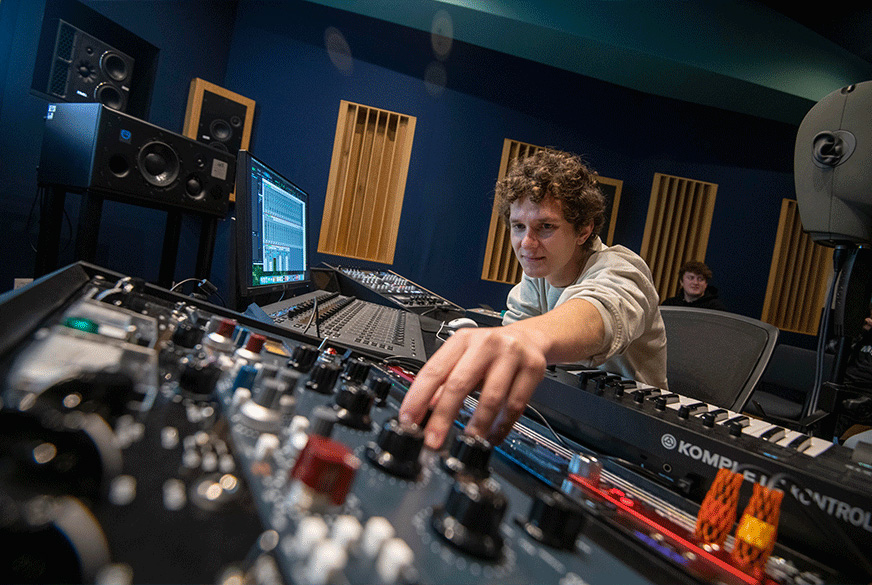
Taught by active industry professionals, the course blends hands-on practice with critical thinking and reflective study. You will work with both cutting edge digital tools and traditional analogue equipment in world class recording studios, building the adaptability to succeed in any professional environment.
You will take part in live briefs, collaborations and industry focused projects, gaining the confidence to innovate, problem solve and define your own professional identity. With access to a creative community across music, media, games and the arts, you will graduate with the skills, insight and networks to thrive in the fast-evolving music and audio industries.
You can expect opportunities to further develop your portfolio, industry knowledge and those all-important connections and contacts.
-

Gain hands-on industry experience
Gain real-world experience so you have the practical skills necessary to make it in your industry
-

Access Cutting-Edge Studio Facilities
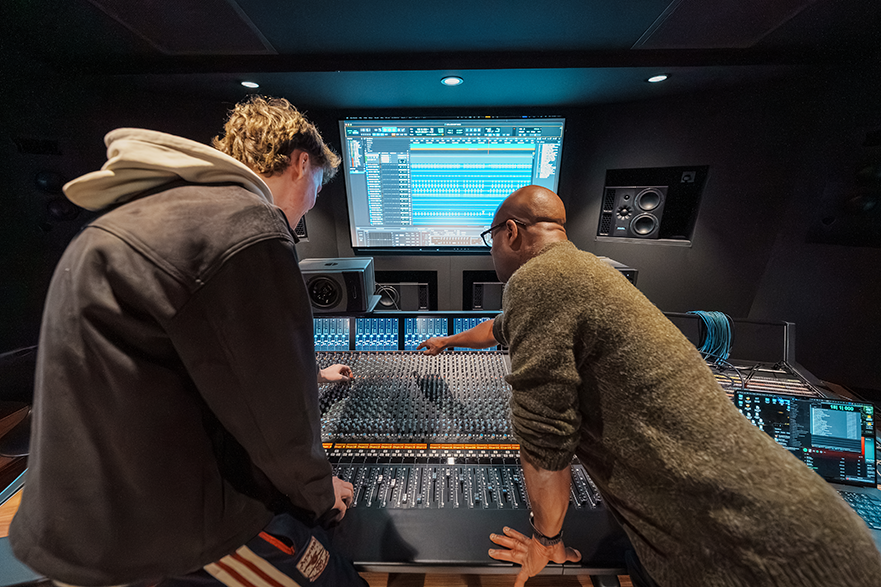
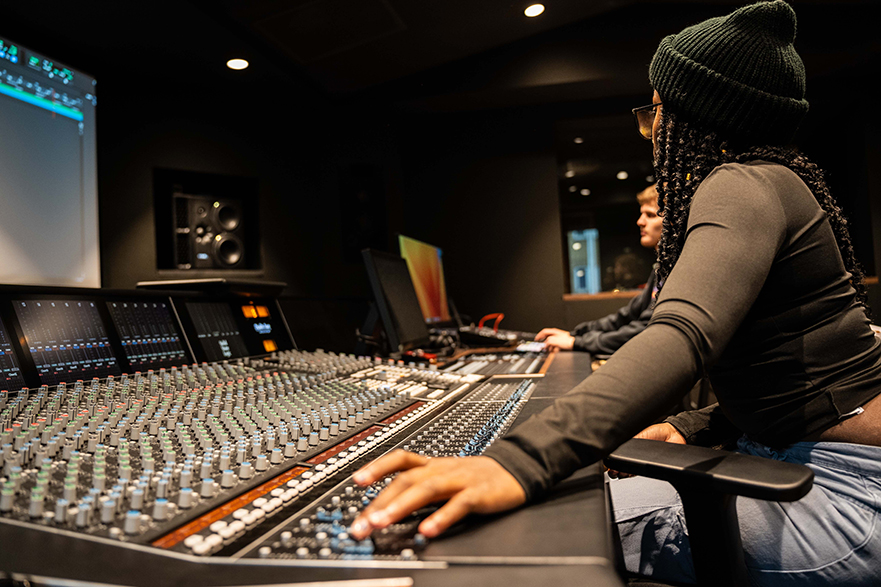
Study in NTU's London Campus, equipped with three industry leading studios featuring SSL Duality consoles
-

Work on live briefs
Boost your portfolio and industry connections by working on live briefs set by industry giants.
-

Start your creative journey in London
Students on all courses across music, content and events work together to perform in an annual large scale, content rich, immersive festival of music for the public with external acts as headliners.
On this course you will develop advanced skills in recording, mixing, composition and production, combining technical training, creative exploration and professional development to prepare you for a sustainable career in music production. You will also engage with the cultural, technological and industry contexts of music making today.
You will experiment with both analogue gear and digital tools, respond to industry briefs and collaborate across disciplines, gaining practical experience that mirrors professional practice. Alongside your technical and creative work, you will explore themes of sustainability, ethics and innovation, learning to reflect on the wider impact of your music at individual, societal and global levels.
You will graduate with the skills and confidence to shape your career in production, songwriting, sync licensing and beyond.
Module information
Here’s a breakdown of what you’ll be studying throughout the course:
Core modules
The Recording Studio underpins past and present productions in music. You will begin your journey on the course by developing your understanding of the fundamentals of the recording studio. You will learn the principles of physical mixing consoles, signal flow, connections, microphone types, and DAWs to record audio.
You will also be introduced to working practices in the recording studio around health and safety, industry standards, and be asked to consider sustainable practice.
You can apply these skills and principles, whether in a traditional professional analogue studio or a digital home studio.
20 credits
This module explores the use of Digital Audio Workstations (DAWs) in the context of various music production genres. You will gain a deep understanding of DAW techniques while examining the similarities and differences in "in-the-box" programming and tools across genres. The module will also incorporate elements of ethnomusicology and the history of popular music styles and technologies to provide an understanding of the cultural and historical contexts of music production.
20 credits
This module focuses on the essential techniques of composing and arranging music with a producer-centric approach. You will explore melody, harmony, and structure, starting with simple production techniques such as 4-bar loop song construction. The module will also cover remixing, cut-downs, and versioning, emphasizing the simplification of existing songs from other formats. Practical exercises and projects will help you develop their skills in creating and arranging music that is both innovative and commercially viable.
20 credits
This module introduces you to the essential techniques and practices of vocal production. You will learn the processes involved in recording, comping, editing, tuning, compressing, de-essing, spatialising, and applying effects to vocal tracks across different genres. The module emphasises practical application, technical skills, and creative approaches to vocal production.
20 credits
This module explores the compositional techniques and creative processes involved in producing music for various media, including podcasts, television, film, theatre, art installations, and video games along with the historical contexts. You will learn how to create music that enhances and supports visual and narrative content, developing skills in scoring, sound design, and the use of digital audio workstations (DAWs).
20 credits
This module introduces you to the fundamental techniques and practices of commercial music production. You will explore various genres and production styles, learning to adapt a given top line or song into multiple commercial formats. The module emphasises practical application, creativity, and technical skills in music production.
20 credits
credits
credits
credits
credits
credits
credits
credits
credits
credits
credits
credits
credits
credits
credits
credits
credits
credits
credits
credits
credits
credits
credits
credits
credits
credits
credits
credits
credits
credits
credits
credits
credits
credits
credits
credits
credits
credits
credits
credits
credits
credits
credits
credits
credits
credits
credits
credits
credits
credits
credits
credits
credits
credits
credits
credits
credits
credits
credits
credits
credits
credits
credits
credits
credits
credits
credits
credits
credits
credits
credits
credits
credits
credits
credits
credits
credits
credits
credits
credits
credits
credits
credits
credits
credits
credits
credits
credits
credits
credits
credits
credits
credits
credits
credits
credits
credits
credits
credits
credits
credits
credits
credits
credits
credits
credits
credits
credits
credits
credits
credits
credits
credits
credits
credits
credits
credits
credits
credits
credits
credits
credits
credits
credits
credits
credits
credits
credits
credits
credits
credits
credits
credits
credits
credits
credits
credits
credits
credits
credits
credits
credits
credits
credits
credits
credits
credits
credits
credits
credits
credits
credits
credits
credits
credits
credits
credits
credits
credits
credits
credits
credits
credits
credits
credits
credits
credits
credits
credits
credits
During Year Two, you will study five core modules and choose one optional 20-credit module from below. Optional modules are offered subject to availability and may change depending on demand and capacity.
Core modules
This module explores how money flows through the sound and music industry, examining the revenue streams that underpin key areas such as recording, publishing, live events, media, and digital distribution. You’ll gain a clearer understanding of how income is generated, and the role that collection societies, licensing agreements, and company or label financing play within the wider business landscape. The module also addresses the financial challenges facing the industry today and looks at how technology such as AI is shaping new and emerging business practices. Through real-world case studies and industry-led discussions, you'll gain practical insights into the economics of sound and music—and how you might navigate your own path within it.
As part of this module, you'll take part in additional practical workshops in submission method development that you can apply across other areas of your course.
20 credits
Through active participation with team-based problem solving, you will work together in mixed teams on a project where you will use your creative ideas to generate solutions to the challenge or brief. Your project will allow you to explore how creativity can make an impact in society, as you choose a theme of sustainability, social justice, enterprise and innovation or community. This collaborative learning experience will expose you to a range of new processes and approaches that will develop your creative thinking.
20 credits
Mixing and Mastering are vital processes to make musical productions commercially ready. You will experience and apply creative and technical processes involved in shaping and finalising music productions. You will explore the tools, techniques, and decision-making strategies used in past and contemporary mixing and mastering processes, with a focus on technical competence, artistic expression and commercial output quality. You will also examine how technology has impacted mixing workflows and apply this understanding to your practice.
Through hands-on experience with digital audio workstations (DAWs), plug-ins, and hardware signal processing tools, you will learn to solve complex creative and technical challenges and critically evaluate your choices.
20 credits
This module provides an in-depth exploration of synthesis, sampling, and sound processing through both software and hardware. You will learn to create, manipulate, and produce electronic sounds, re-recording them to forge fresh and exciting new pathways in electronic music. The module emphasises creativity, technical skills, and the application of sound design principles in electronic music production.
20 credits
This module explores the employable world of production music, focusing on the creation of tracks for commercial use in various media such as film, television, advertisements, and online content within the context of pre cleared library publishing: an area of the industry that pays passive income to you for the life of the copyright.
You will learn how to find your unique selling proposition (USP) in the competitive market of production music and the module culminates in a format specifc submission to a well-known library, providing you with practical experience and industry exposure.
You will learn ways to collaborate with others and ensure you are well prepared for work in this field.
20 credits
credits
credits
credits
credits
credits
credits
credits
credits
credits
credits
credits
credits
credits
credits
credits
credits
credits
credits
credits
credits
Optional modules
This practical module introduces the technologies and techniques behind live sound reinforcement. You will learn the features, functions, and interconnections of sound system components, including point source and line array systems. Through hands-on experience, you will build, test, and operate sound systems, ensuring they are functional and fit for purpose. While focused on live music events, the skills gained can also be applied to corporate events, theatre, and general speech reinforcement.
20 credits
Do you love live music and want to create events that leave a lasting impact? This module introduces the principles and practices of designing, planning, and delivering live music events. You will develop a complete event proposal through lectures, workshops, and simulations, considering audience engagement, stakeholder management, logistics, sustainability, and professional standards. The module emphasises teamwork, reflective practice, and practical skills in a music-focused context.
20 credits
This optional module aims to develop your entrepreneurial mindset through an appreciation of the creative industries. It provides an opportunity for experiential learning by combining entrepreneurial theory, innovation, and creative problem solving.
20 credits
credits
credits
credits
credits
credits
credits
credits
credits
credits
credits
credits
credits
credits
credits
credits
credits
credits
credits
credits
credits
credits
credits
credits
credits
credits
credits
credits
credits
credits
credits
credits
credits
credits
credits
credits
credits
credits
credits
credits
credits
credits
credits
credits
credits
credits
credits
credits
credits
credits
credits
credits
credits
credits
credits
credits
credits
credits
credits
credits
credits
credits
credits
credits
credits
credits
credits
credits
credits
credits
credits
credits
credits
credits
credits
credits
credits
credits
credits
credits
credits
credits
credits
credits
credits
credits
credits
credits
credits
credits
credits
credits
credits
credits
credits
credits
credits
credits
credits
credits
credits
credits
credits
credits
credits
credits
credits
credits
credits
credits
credits
credits
credits
credits
credits
credits
credits
credits
credits
credits
credits
credits
credits
credits
credits
credits
credits
credits
credits
credits
credits
credits
credits
credits
credits
credits
credits
credits
credits
credits
credits
credits
credits
credits
credits
credits
credits
credits
Placement year routes
We have an option for all of our students to undertake a placement year and allow you to decide whether this is right for you once you have completed years 1 and 2 of your course. This time spent working in industry provides our students with crucial work experience, which is highly prized and much sought after by employers upon graduation. If you are successful in securing a placement you will have the chance to gain an additional Certificate or Diploma in Professional Practice, dependent on duration.
The additional placement year incurs a fee. For international students considering the transfer to the 4-yr SW route it's important to seek advice from the International Student Support team and the Home Office regarding any potential visa implications and costs. For UK students, advice should also be sought regarding SLC eligibility, if applicable.
* If you choose to take the sandwich route option, you will need to apply for this course by using the full-time UCAS code.
0 credits
If you're studying on our sandwich route you can also opt to study abroad for a full academic year, or for a semester, during Year Three. This is an optional and additional period of study that complements your degree at NTU as an alternative to taking a work placement.
This is an exciting opportunity to experience a different national culture, teaching and learning styles and subjects in an international environment. The destination university must be a year abroad / exchange partner of NTU or member of a formally recognised scheme such as the International Student Exchange Programme (ISEP).
Our NTU Global and student mobility team will support you in finding the right opportunity from one of the many international partners available around the world.
Successful completion of a period of international study will earn you a standalone award an International Study Certificate (minimum six weeks) or the International Study Diploma (minimum 36 weeks).
credits
credits
credits
credits
credits
credits
credits
credits
credits
credits
credits
credits
credits
credits
credits
credits
credits
credits
credits
credits
credits
credits
credits
credits
credits
credits
credits
credits
credits
credits
credits
credits
credits
credits
credits
credits
credits
credits
credits
credits
credits
credits
credits
credits
credits
credits
credits
credits
credits
credits
credits
credits
credits
credits
credits
credits
credits
credits
credits
credits
credits
credits
credits
credits
credits
credits
credits
credits
credits
credits
credits
credits
credits
credits
credits
credits
credits
credits
credits
credits
credits
credits
credits
credits
credits
credits
credits
credits
credits
credits
credits
credits
credits
credits
credits
credits
credits
credits
credits
credits
credits
credits
credits
credits
credits
credits
credits
credits
credits
credits
credits
credits
credits
credits
credits
credits
credits
credits
credits
credits
credits
credits
credits
credits
credits
credits
credits
credits
credits
credits
credits
credits
credits
credits
credits
credits
credits
credits
credits
credits
credits
credits
credits
credits
credits
credits
credits
credits
credits
credits
credits
credits
credits
credits
credits
credits
credits
credits
credits
credits
credits
credits
credits
credits
credits
credits
credits
credits
credits
credits
credits
credits
credits
credits
Core modules
Get ready to dive into the real world of the creative industries! This module is all about tackling live industry work via real briefs or other professional practices and developing the skills you need to thrive in your career. Whatever you're producing, you’ll be responding to industry challenges, pushing your problem solving, project management and creativity to build a portfolio that sets you apart. With skills workshops, and hands-on experience, this is your chance to level up and prove what you can do within professional parameters.
By the end of the module you will have assets that could support your Future Pathways module outward facing portfolio for semester 2, and the skills can support your Capstone Project.
20 credits
This module provides an opportunity for you to consolidate your academic, practical, and professional learning into a focused and strategic portfolio that reflects your readiness for the next stage of your career.
Drawing on the experiences, insights, and skills developed throughout your degree, you will curate a body of work that articulates your professional identity and future direction within Music and Events industries. This is a chance to synthesise your journey so far and present a compelling narrative of your abilities, values, and ambitions.
The emphasis is on finalising your career or further study plans, demonstrating a clear understanding of industry expectations, and showcasing your preparedness for employment or continued education. Through engagement with professional practices and critical self-reflection, you will develop a portfolio that not only highlights your achievements but positions you confidently for your next steps.
20 credits
Final Capstone Project is the culmination of your degree and an opportunity to integrate your learning, skills and experiences. This is your chance to create something meaningful, challenge yourself, and showcase who you are as a professional in your field.
At the core of your project is a practical, creative or research-led negotiated output – what this entails depends on your discipline area. These projects may be prescribed, collaborative or individual.
Whatever form your project takes, you are expected to frame it as a research project as well as to consider aspects such as existing and/or emerging technologies (including AI), ways of working, sustainability and social responsibility. Moreover, you are required to critically reflect on the distance travelled, the role collaboration played and any challenges you faced and overcame. You are invited to link this reflection with your personal and professional goals. Your appendices will evidence processes and experimentation within your subject area.
40 credits
In this module you will apply what you have learnt throughout your course and start developing a Final Capstone Project. Working with your peers and lecturers, you will negotiate collaborative practice and individual achievement with the view of showcasing your work.
Depending on your course, these final capstone projects may be prescribed, collaborative or individual.
By the end of the module, you are expected to have arrived at an evidence-backed plan that can be implemented in Semester 2. You will have assessed any possible challenges and risks, including how collaboration and ethical considerations may affect your journey.
You will be submitting a project proposal for approval at the end of the module. In addition, you are expected to provide planning documentation and/or examples of work which will be negotiated with the course team when the assessment is set.
Any project work or expenditure can only take place after the project has been approved by the relevant course team.
The delivery comprises discipline-specific practical classes as well as lectures that will help you to design and contextualise the project.
20 credits
This module explores the cutting edge of music production through a critical and practical engagement with emerging technologies. You will investigate and apply tools such as AI-assisted composition, spatial audio, real-time collaboration platforms, and immersive audio environments (e.g., VR/AR). Through a series of guided workshops, students will develop a focused understanding of how these technologies are reshaping creative workflows, production techniques, and audience experiences. The module emphasises hands-on experimentation, critical reflection, and the integration of new tools into professional practice. Assessments are designed to encourage both technical proficiency and conceptual depth, with opportunities for synoptic application of skills and knowledge gained throughout the degree.
20 credits
credits
credits
credits
credits
credits
credits
credits
credits
credits
credits
credits
credits
credits
credits
credits
credits
credits
credits
credits
credits
credits
credits
credits
credits
credits
credits
credits
credits
credits
credits
credits
credits
credits
credits
credits
credits
credits
credits
credits
credits
credits
credits
credits
credits
credits
credits
credits
credits
credits
credits
credits
credits
credits
credits
credits
credits
credits
credits
credits
credits
credits
credits
credits
credits
credits
credits
credits
credits
credits
credits
credits
credits
credits
credits
credits
credits
credits
credits
credits
credits
credits
credits
credits
credits
credits
credits
credits
credits
credits
credits
credits
credits
credits
credits
credits
credits
credits
credits
credits
credits
credits
credits
credits
credits
credits
credits
credits
credits
credits
credits
credits
credits
credits
credits
credits
credits
credits
credits
credits
credits
credits
credits
credits
credits
credits
credits
credits
credits
credits
credits
credits
credits
credits
credits
credits
credits
credits
credits
credits
credits
credits
credits
credits
credits
credits
credits
credits
credits
credits
credits
credits
credits
credits
credits
credits
credits
credits
credits
credits
credits
credits
credits
credits
credits
credits
credits
credits
credits
credits
credits
credits
credits
credits
credits
credits
credits
credits
credits
credits
credits
credits
credits
credits
credits
credits
credits
credits
credits
credits
credits
credits
credits
credits
credits
credits
credits
credits
credits
credits
credits
credits
credits
credits
credits
credits
credits
credits
credits
credits
credits
credits
credits
credits
credits
credits
credits
credits
credits
credits
credits
credits
credits
credits
credits
credits
credits
credits
credits
credits
credits
credits
credits
credits
credits
credits
credits
credits
credits
credits
credits
credits
credits
credits
credits
credits
credits
credits
credits
credits
credits
credits
credits
credits
credits
credits
credits
credits
credits
credits
credits
credits
credits
credits
credits
credits
credits
credits
credits
credits
credits
credits
credits
credits
credits
credits
credits
credits
credits
credits
credits
credits
credits
credits
credits
credits
credits
credits
credits
credits
credits
credits
credits
credits
credits
credits
credits
credits
credits
credits
credits
credits
credits
credits
credits
credits
credits
credits
credits
credits
credits
credits
credits
credits
credits
credits
credits
credits
credits
credits
credits
credits
credits
credits
credits
credits
credits
credits
credits
credits
credits
credits
credits
credits
credits
credits
credits
credits
credits
credits
credits
credits
credits
credits
credits
credits
credits
credits
credits
credits
credits
credits
credits
credits
credits
credits
credits
credits
credits
credits
credits
credits
credits
credits
credits
credits
credits
credits
credits
credits
credits
credits
credits
credits
credits
credits
credits
credits
credits
credits
credits
credits
credits
credits
credits
credits
credits
credits
credits
credits
credits
credits
credits
credits
credits
credits
credits
credits
credits
credits
credits
credits
credits
credits
credits
credits
credits
credits
credits
credits
credits
credits
credits
credits
credits
credits
credits
credits
credits
credits
credits
credits
credits
credits
credits
credits
credits
credits
credits
credits
credits
credits
credits
credits
credits
credits
credits
credits
credits
credits
credits
credits
credits
credits
credits
credits
credits
credits
credits
credits
credits
credits
credits
credits
credits
credits
credits
credits
credits
credits
credits
credits
credits
credits
credits
credits
credits
credits
credits
credits
credits
credits
credits
credits
credits
credits
credits
credits
credits
credits
credits
credits
credits
credits
credits
credits
credits
credits
credits
credits
credits
credits
credits
credits
credits
credits
credits
credits
credits
credits
credits
credits
credits
credits
credits
credits
credits
credits
credits
credits
credits
credits
credits
credits
credits
credits
credits
credits
credits
credits
credits
credits
credits
credits
credits
credits
credits
credits
credits
credits
credits
credits
credits
credits
credits
credits
credits
credits
credits
credits
credits
credits
credits
credits
credits
credits
credits
credits
credits
credits
credits
credits
credits
credits
credits
credits
credits
credits
credits
credits
credits
credits
credits
credits
credits
credits
credits
credits
credits
credits
credits
credits
credits
credits
credits
credits
credits
credits
credits
credits
credits
credits
credits
credits
credits
credits
credits
credits
credits
credits
credits
credits
credits
credits
credits
credits
credits
credits
credits
credits
credits
credits
credits
credits
credits
credits
credits
credits
credits
credits
credits
credits
credits
credits
credits
credits
credits
credits
credits
credits
credits
credits
credits
credits
credits
credits
credits
credits
credits
credits
credits
credits
credits
credits
credits
credits
credits
credits
credits
credits
credits
credits
credits
credits
credits
credits
credits
credits
credits
credits
credits
credits
credits
credits
credits
credits
credits
credits
credits
credits
credits
credits
credits
credits
credits
credits
credits
credits
credits
credits
credits
credits
credits
credits
credits
credits
credits
credits
credits
credits
credits
credits
credits
credits
credits
credits
credits
credits
credits
credits
credits
credits
credits
credits
credits
credits
credits
credits
credits
credits
credits
credits
credits
credits
credits
credits
credits
credits
credits
credits
credits
credits
credits
credits
credits
credits
credits
credits
credits
credits
credits
credits
credits
credits
credits
credits
credits
credits
credits
credits
credits
credits
credits
credits
credits
credits
credits
credits
credits
credits
credits
credits
credits
credits
credits
credits
credits
credits
credits
credits
credits
credits
credits
credits
credits
credits
credits
credits
credits
credits
credits
credits
credits
credits
credits
credits
credits
credits
credits
credits
credits
credits
credits
credits
credits
credits
credits
credits
credits
credits
credits
credits
credits
credits
credits
credits
credits
credits
credits
credits
credits
credits
credits
credits
credits
credits
credits
credits
credits
credits
credits
credits
credits
credits
credits
credits
credits
credits
credits
credits
credits
credits
credits
credits
credits
credits
credits
credits
credits
credits
credits
credits
credits
credits
credits
credits
credits
credits
credits
credits
credits
credits
credits
credits
credits
credits
credits
credits
credits
credits
credits
credits
credits
credits
credits
credits
credits
credits
credits
credits
credits
credits
credits
credits
credits
credits
credits
credits
credits
credits
credits
credits
credits
credits
credits
credits
credits
credits
credits
credits
credits
credits
credits
credits
credits
credits
credits
credits
credits
credits
credits
credits
credits
credits
credits
credits
credits
credits
credits
credits
credits
credits
credits
credits
credits
credits
credits
credits
credits
credits
credits
credits
credits
credits
credits
credits
credits
credits
credits
credits
credits
credits
credits
credits
credits
credits
credits
credits
credits
credits
credits
credits
credits
credits
credits
credits
credits
credits
credits
credits
credits
credits
credits
credits
credits
credits
credits
credits
credits
credits
credits
credits
credits
credits
credits
credits
credits
credits
credits
credits
credits
credits
credits
credits
credits
credits
credits
credits
credits
credits
credits
credits
credits
credits
credits
credits
credits
credits
credits
credits
credits
credits
credits
credits
credits
credits
credits
credits
credits
credits
credits
credits
credits
credits
credits
credits
credits
credits
credits
credits
credits
credits
credits
credits
credits
credits
credits
credits
credits
credits
credits
credits
credits
credits
credits
credits
credits
credits
credits
credits
credits
credits
credits
credits
credits
credits
credits
credits
credits
credits
credits
credits
credits
credits
credits
credits
credits
credits
credits
credits
credits
credits
credits
credits
credits
credits
credits
credits
credits
credits
credits
credits
credits
credits
credits
credits
credits
credits
credits
credits
credits
credits
credits
credits
credits
credits
credits
credits
credits
credits
credits
credits
credits
credits
credits
credits
credits
credits
credits
credits
credits
credits
credits
credits
credits
credits
credits
credits
credits
credits
credits
credits
credits
credits
credits
credits
credits
credits
credits
credits
credits
credits
credits
credits
credits
credits
credits
credits
credits
credits
credits
credits
credits
credits
credits
credits
credits
credits
credits
credits
credits
credits
credits
credits
credits
credits
credits
credits
credits
credits
credits
credits
credits
credits
credits
credits
credits
credits
credits
credits
credits
credits
credits
credits
credits
credits
credits
credits
credits
credits
credits
credits
credits
credits
credits
credits
credits
credits
credits
credits
credits
credits
credits
credits
credits
credits
credits
credits
credits
credits
credits
credits
credits
credits
credits
credits
credits
credits
credits
credits
credits
credits
credits
credits
credits
credits
credits
credits
credits
credits
credits
credits
credits
credits
credits
credits
credits
credits
credits
credits
credits
credits
credits
credits
credits
credits
credits
credits
credits
credits
credits
credits
credits
credits
credits
credits
credits
credits
credits
credits
credits
credits
credits
credits
credits
credits
credits
credits
credits
credits
credits
We regularly review our course content based on student and employer feedback to ensure they remain current and relevant. This may result in changes to module content or availability in future years. Optional modules will only run where there is sufficient demand. This will be determined on a case-by-case basis to protect the academic and student experience.
How you're taught
Teaching and learning will take place in a range of bespoke studios, IT suites and classrooms. You’ll develop your practical, technical and critical thinking skills through a mixture of lectures, workshops, seminars, academic tutorials and guest lectures. In these classes you’ll explore the core aspects of the module subject areas whilst also reporting back on your individual progress and research findings.
The audio and music industry is embedded in the course, with industry and work-related opportunities including live client briefs, guest lectures and short work placements. These will be offered in addition to your studies. By the end of your studies, you’ll have developed the skills to independently gain industry experiences.
Artificial Intelligence (AI) and Innovation in Music Production
Our Sound Engineering & Audio Production and Music Production courses give students a clear understanding of how AI and machine learning are transforming professional audio and music workflows in the UK and internationally. Many tools already used in NTU London’s studios incorporate AI to streamline labour intensive processes such as audio restoration, transcription, stem extraction, and file organisation. This allows students to focus more on creative decision making, experimentation and the development of a distinct sonic identity across mixing, mastering and production.
Students are encouraged to explore emerging technologies and to consider the ethical implications of generative and assistive AI for the audio and music sectors, including issues surrounding copyright, authorship, sustainability and overreliance on automated outputs. They are also expected to discuss and agree the use of AI driven tools in their creative and technical work, ensuring transparency in how these technologies support their processes while maintaining the integrity and originality of their own sound.
Find out more about AI, Creativity and Innovation at the Nottingham School of Art & Design | Nottingham Trent University.
Contact hours
For each 20-credit module, you’ll spend about 200 hours learning overall. Around 40 of those hours will be taught in lectures or seminars. The rest of the time is for independent study, reading, research, or working on assignments.
Entry requirements
This course is in Clearing
Looking for a place in Clearing? We are accepting applications and would love to hear from you!
UK students
Clearing requirements
From 80 UCAS tariff points from up to 4 qualifications.
To discuss our entry requirements and see what we can offer you, call us now on +44 (0)115 848 6000. Alternatively, if you already have your qualifications, apply online via our Clearing Application form.
Additional requirements
You will also have at least one of the following music qualifications:
- A level or other level 3 qualification in a related subject such as BTEC Extended Diploma in Music Technology or Production (or similar, e.g. RSL Awards)
We welcome applicants without the above music technology entry requirements. You can find further guidance on this process on our Application Guidance for Music Technology courses at NTU page.
To find out what qualifications have tariff points, please use our tariff calculator.
Additional requirements for UK students
There are no additional requirements for this course.
Contextual offers
We consider every application in the context of your individual circumstances and educational background. This may include information about where you live, the school or college you attended, or experiences that may have shaped your educational journey. This is known as a contextual offer, and we use information provided through UCAS to help inform our decisions. By considering achievement in context, we can better recognise academic potential and ensure applicants are assessed as fairly and fully as possible. Please note we do not make contextual offers during Clearing.
Meeting our entry requirements
Hundreds of qualifications in the UK have UCAS Tariff points attached to specific grades, including A-levels, BTECs, T Levels and many more. You can use your grades and points from up to four different qualifications to meet our criteria. Enter your predicted or achieved grades into our Tariff calculator to find out how many points your qualifications are worth.
Other qualifications and experience
NTU welcomes applications from students with non-standard qualifications and learning backgrounds, either for year one entry or for advanced standing beyond the start of a course into year 2 or beyond.
We consider study and/or credit achieved from a similar course at another institution (otherwise known as credit transfer), vocational and professional qualifications, and broader work or life experience.
Our Recognition of Prior Learning and Credit Transfer Policy outlines the process and options available for this route. If you wish to apply via Recognition of Prior Learning, please contact the central Admissions and Enquiries Team who will be able to support you through the process.
Getting in touch
If you need more help or information, get in touch through our enquiry form.
International students
Clearing requirements
From 80 UCAS tariff points from up to 4 qualifications.
To discuss our entry requirements and see what we can offer you, call us now on +44 (0)115 848 6000. Alternatively, if you already have your qualifications, apply online via our Clearing Application form.
Additional requirements
You will also have at least one of the following music qualifications:
- A level or other level 3 qualification in a related subject such as BTEC Extended Diploma in Music Technology or Production (or similar, e.g. RSL Awards)
We welcome applicants without the above music technology entry requirements. You can find further guidance on this process on our Application Guidance for Music Technology courses at NTU page.
English language requirements: See our English language requirements page for requirements for your subject and information on alternative tests and Pre-sessional English.
Additional requirements for international students
If you need help achieving the academic entry requirements, we offer a Foundation preparation course for this degree. The course is offered through our partner Nottingham Trent International College (NTIC) based on our City campus.
English language requirements
View our English language requirements for all courses, including alternative English language tests and country qualifications accepted by the University.
If you need help achieving the language requirements, we offer a Pre-Sessional English for Academic Purposes course on our City campus which is an intensive preparation course for academic study at NTU.
Other qualifications and experience
If you have the right level of qualifications, you may be able to start your Bachelors degree at NTU in year 2 or year 3. This is called ‘advanced standing’ entry and is decided on a case-by case basis after our assessment of your qualifications and experience.
You can view our Recognition of Prior Learning and Credit Transfer Policy which outlines the process and options available, such as recognising experiential learning and credit transfer.
Sign up for emails
Sign up to receive regular emails from the International Office. You'll hear about our news, scholarships and any upcoming events in your country with our expert regional teams.
Getting in touch
If you need advice about studying at NTU as an international student or how to apply, our international webpages are a great place to start. If you have any questions about your study options, your international qualifications, experience, grades or other results, please get in touch through our enquiry form. Our international teams are highly experienced in answering queries from students all over the world.
Policies
We strive to make our admissions procedures as fair and clear as possible. To find out more about how we make offers, visit our admissions policies page.